UX Research
- Shadowed conductors to map paper, handheld, and app-based workflows
- Created personas, journey maps, and empathy maps with real train attendants
- Prioritized pain points by frequency and severity across ticket types
Replaced paper-heavy conductor workflows across ÖBB's network with a single mobile tool for ticket sales, seat upgrades, discount application, cash management, and schedule access.
Role
Lead UX Designer
Team Members
1 Product Manager, 15 Engineers, 6 QA
Timeline
6 mos
ÖBB conductors were weighed down by antiquated systems and burdened with heavy equipment on their daily commutes. The workflow was slow, error-prone, and frustrating for both the crew and the passengers waiting in the aisle. The real challenge was replacing those physical ticket printers and point-of-sale units with a single, reliable iOS app that could win the trust of a workforce used to paper.
Train conductors were dragging around paper ticket books, handheld devices, and other heavy, outdated gear just to sell a ticket. Selling certain ticket types was awkward and slow, and there was no easy way to access or apply discounts in the middle of a moving sale. Checking opening cash float and the end-of-day balance was unreliable, and when passengers asked about delays or schedules, conductors had nothing quick to point them to. On top of all that, the team had to trust the new iOS devices enough to leave their familiar paper tools behind.
As Lead UX Designer for the iOS MobileFirst Travel and Transportation team, I worked directly with the Project Manager, Product Owner, and Engineering teams to evaluate, research, and design the enhancements for the Train Tickets iOS app used by ÖBB, the Austrian National Railway company.
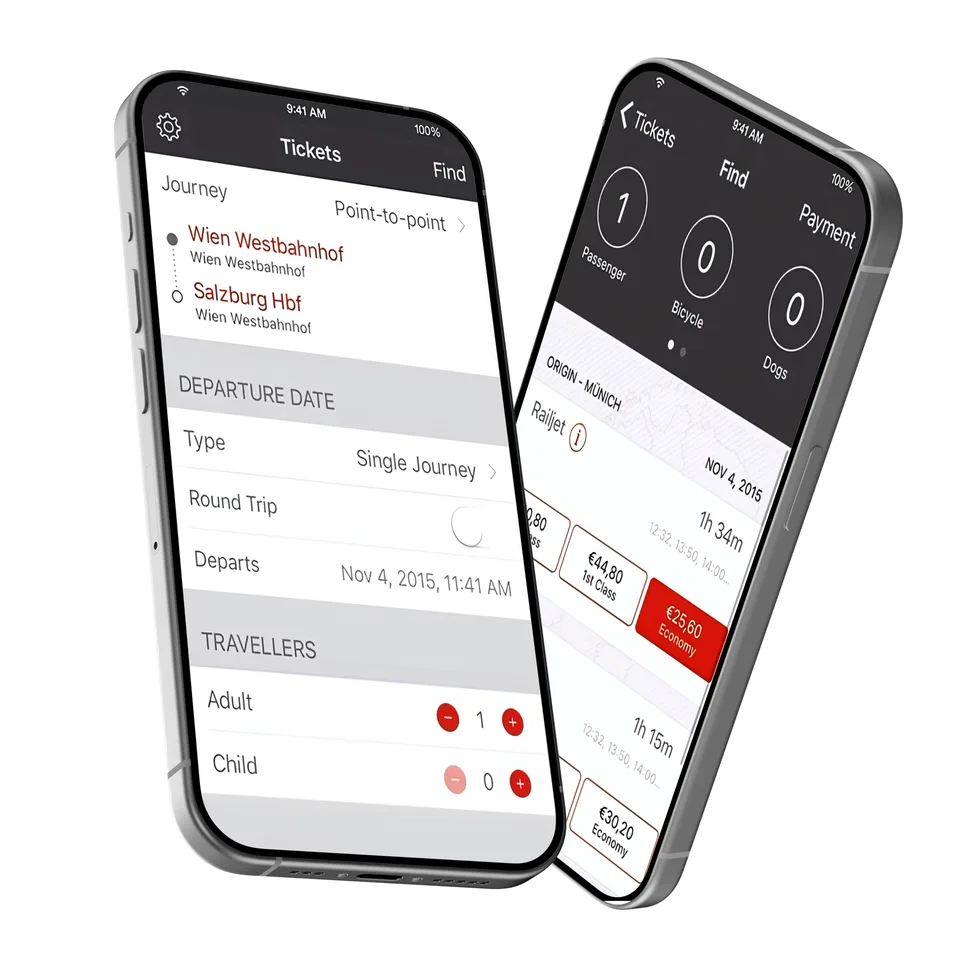
Today, ticket attendants can sell tickets, check reservations, validate schedule information, sell seat upgrades, and spot cross-sell opportunities, all on Apple devices while onboard.
I combined consolidation strategy with direct field research to give the ÖBB team a shared direction. The work spanned information architecture, day-in-the-life mapping, stakeholder alignment, and validation.
Product Manager
1
Engineering
15 Engineers
QA
6
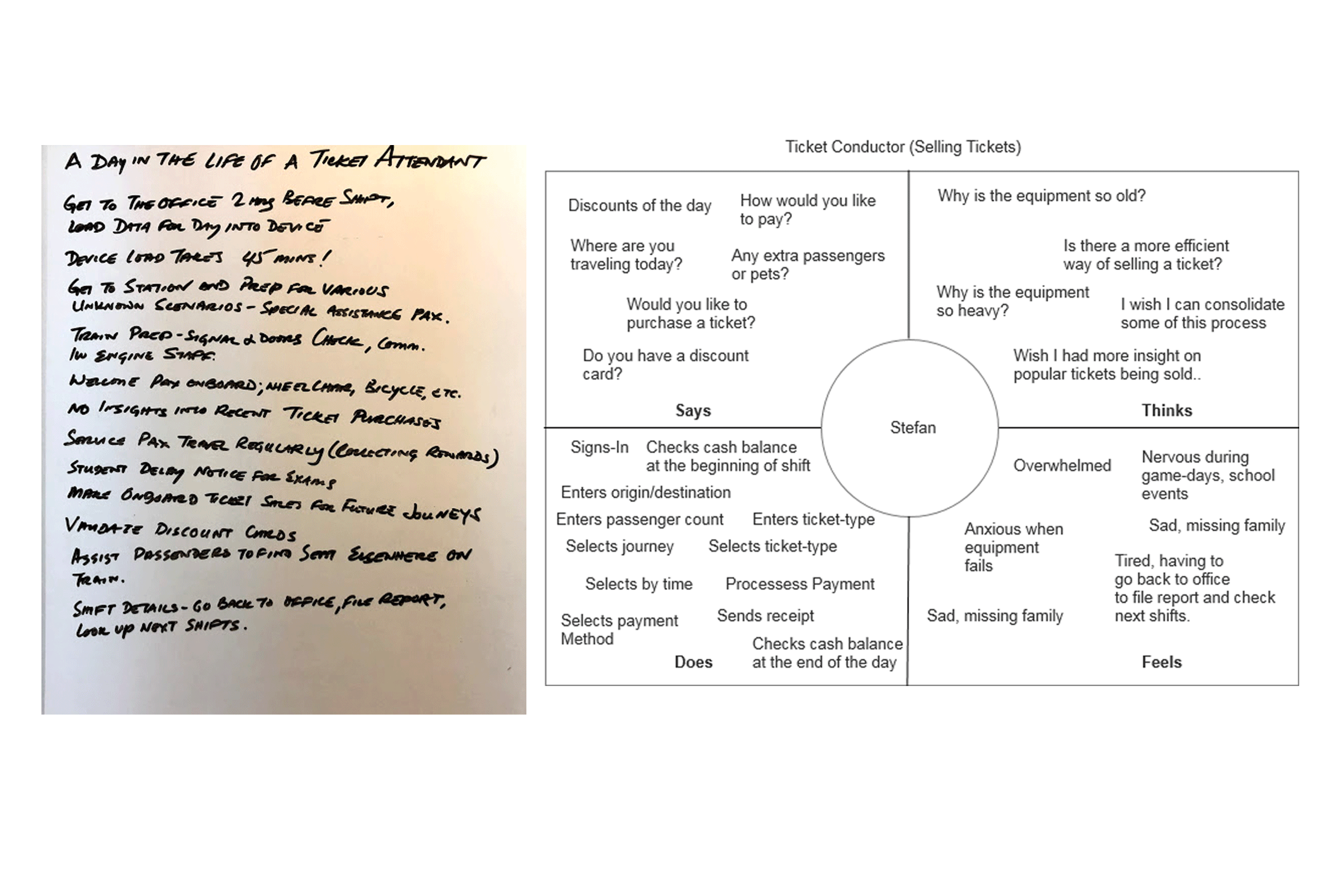
A whiteboarding session with a set of conductors visiting from Austria uncovered how they were overburdened by outdated gear and needed a faster way to sell tickets, apply discounts, manage cash, and answer schedule questions.
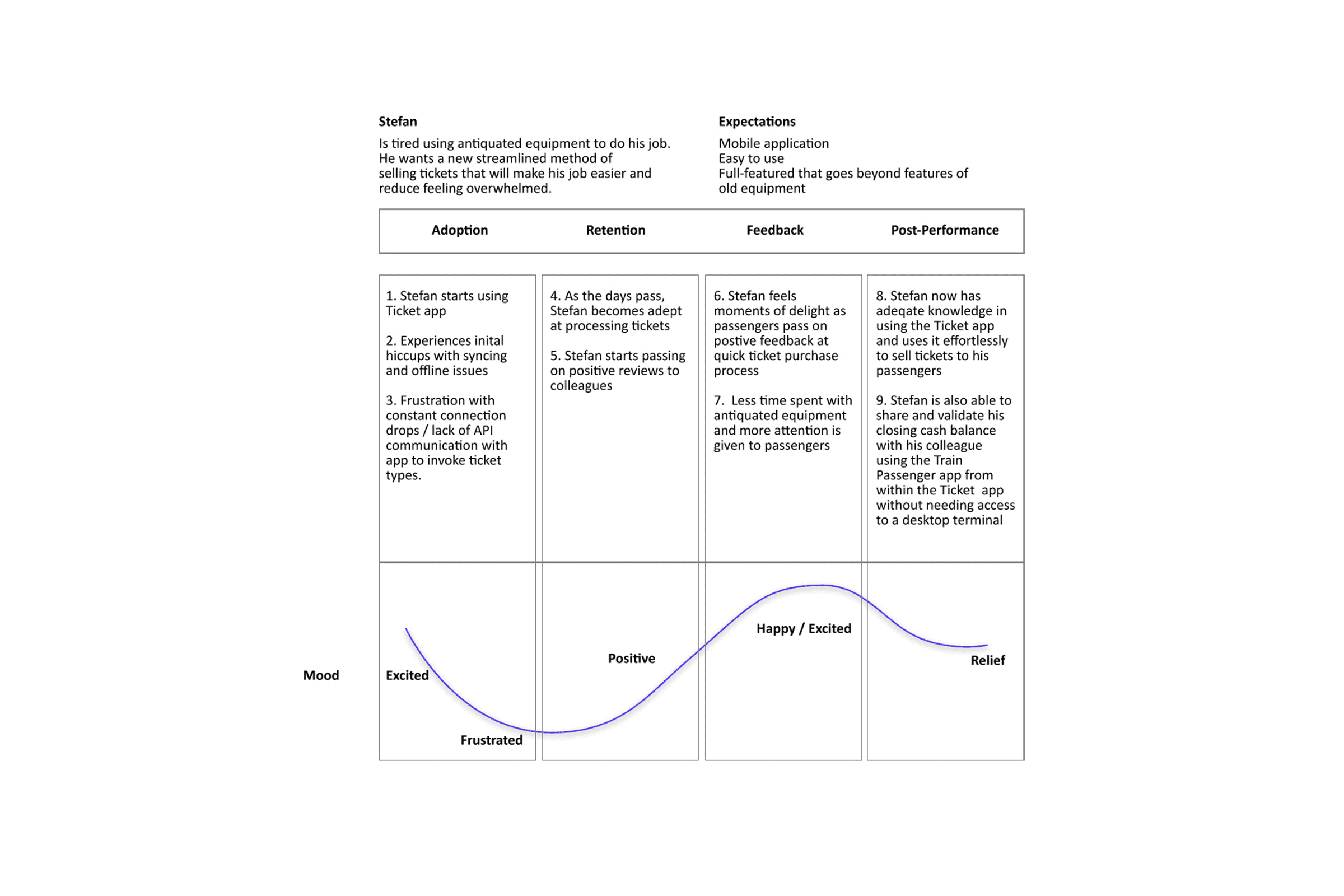
I partnered with other Train app leads to build user personas and empathy maps, then ran day-in-the-life sessions to capture usage patterns, pain points, and priorities.
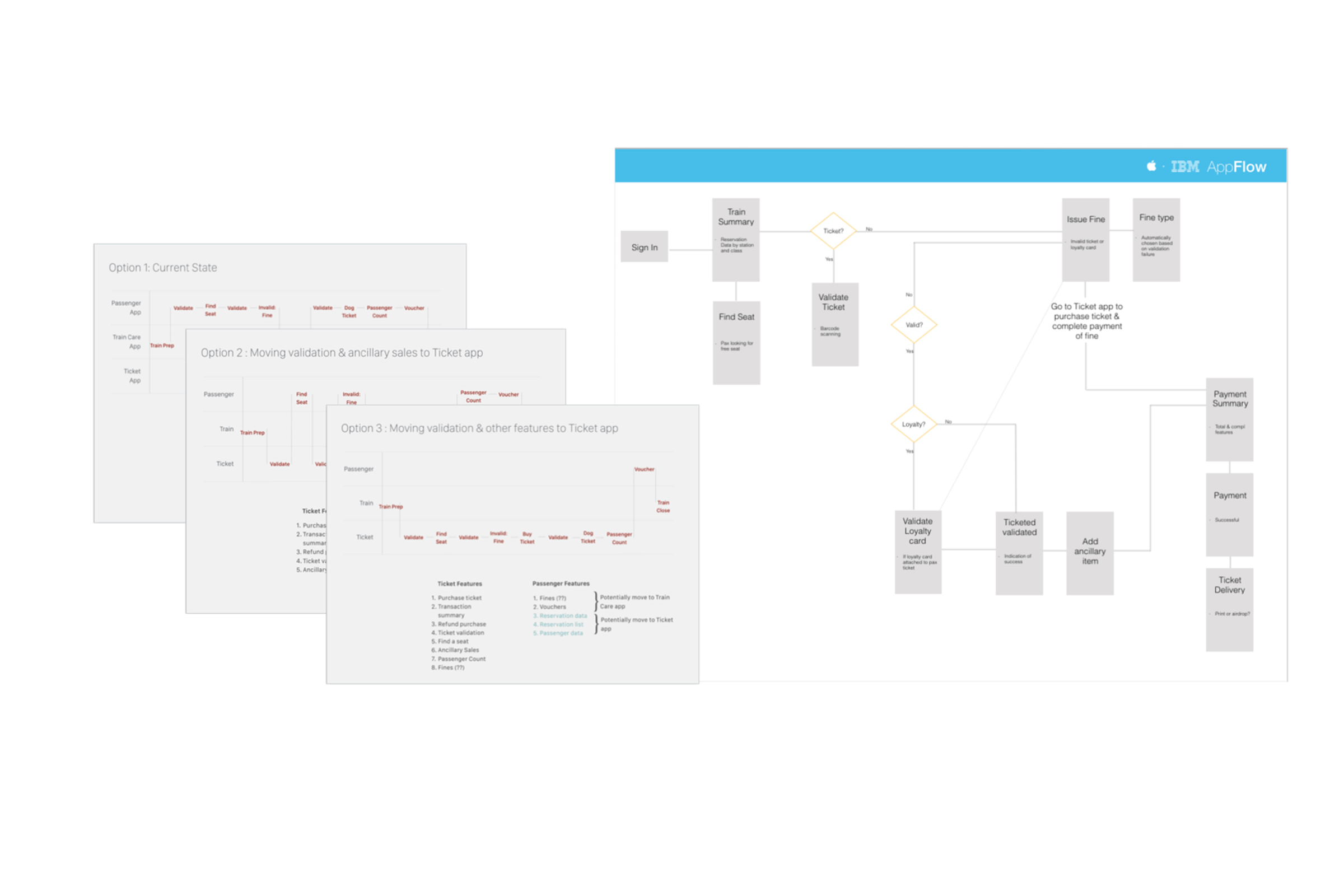
Lo-fi prototypes compared consolidated and solo app flows, including how iOS multitasking would work in a standalone environment.
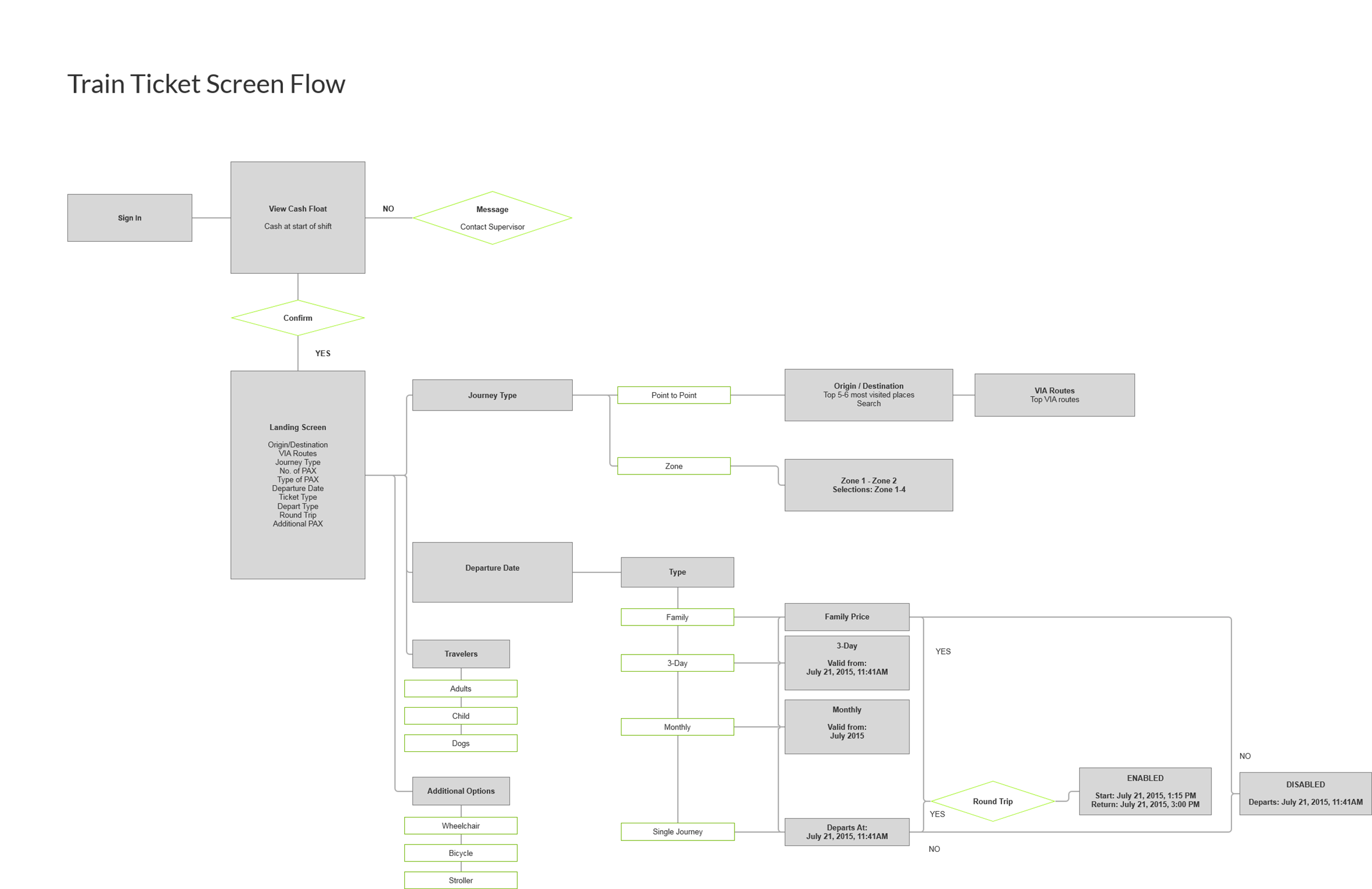
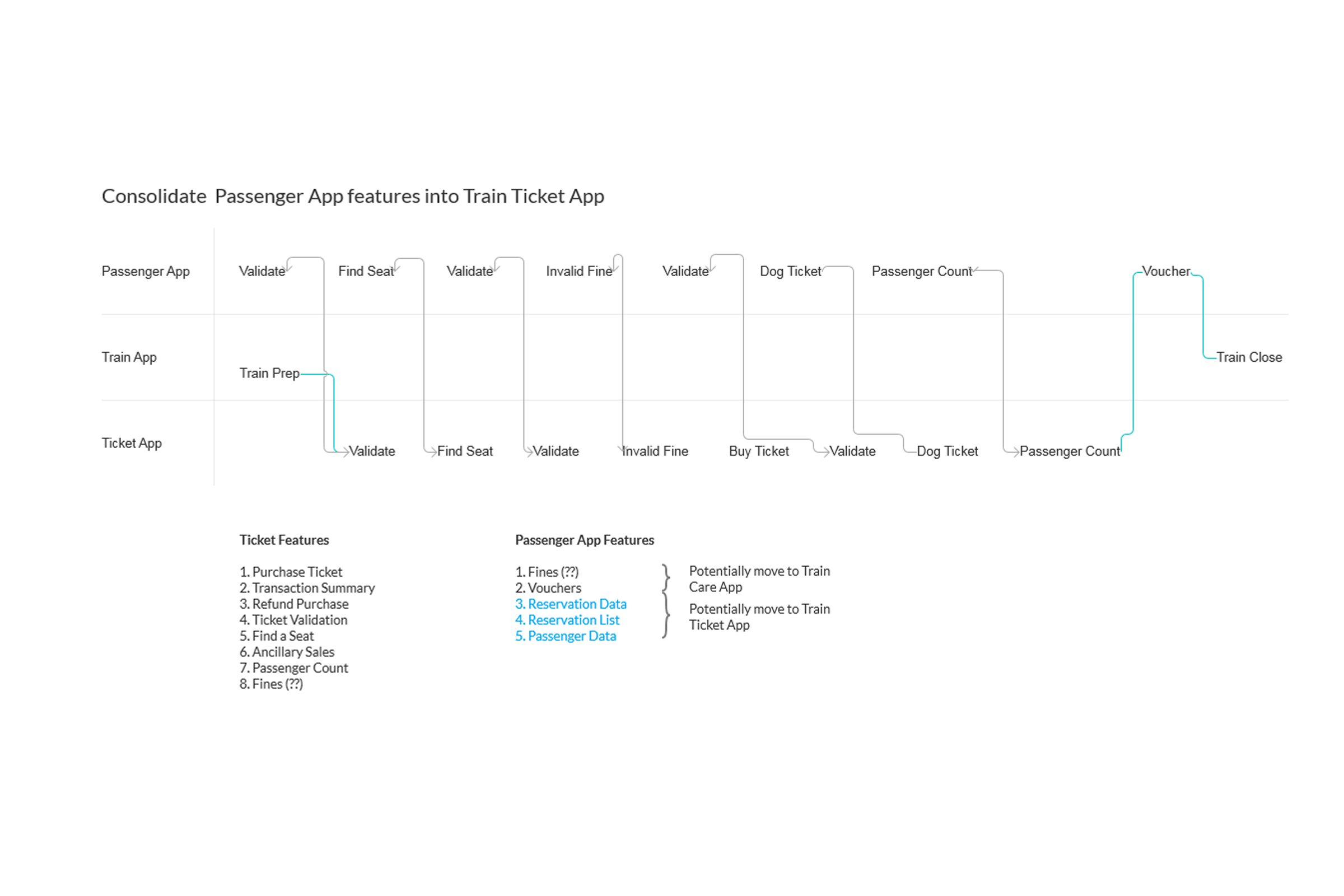
I led client conversations with other UX Leads working on their respective Train-suite apps, using process-flow maps to compare consolidating the train apps into one tool versus keeping them as separate spotlight apps.
Reasoning Behind the Finish
Every conductor I interviewed said the same thing: the new iPhones and iPads had to be able to do everything their heavy, antiquated hardware could, ticket printing machines, ticket rolls, and point-of-sale units they'd been carrying on their shoulders for the whole ride. That set the bar for consolidation: one lightweight device replacing a bag full of equipment, not just a digital add-on next to it.
Over six months, I collaborated closely with users, the other Train-suite UX Leads, Engineering, and Product through rapid sprints to build the ÖBB Train app suite.
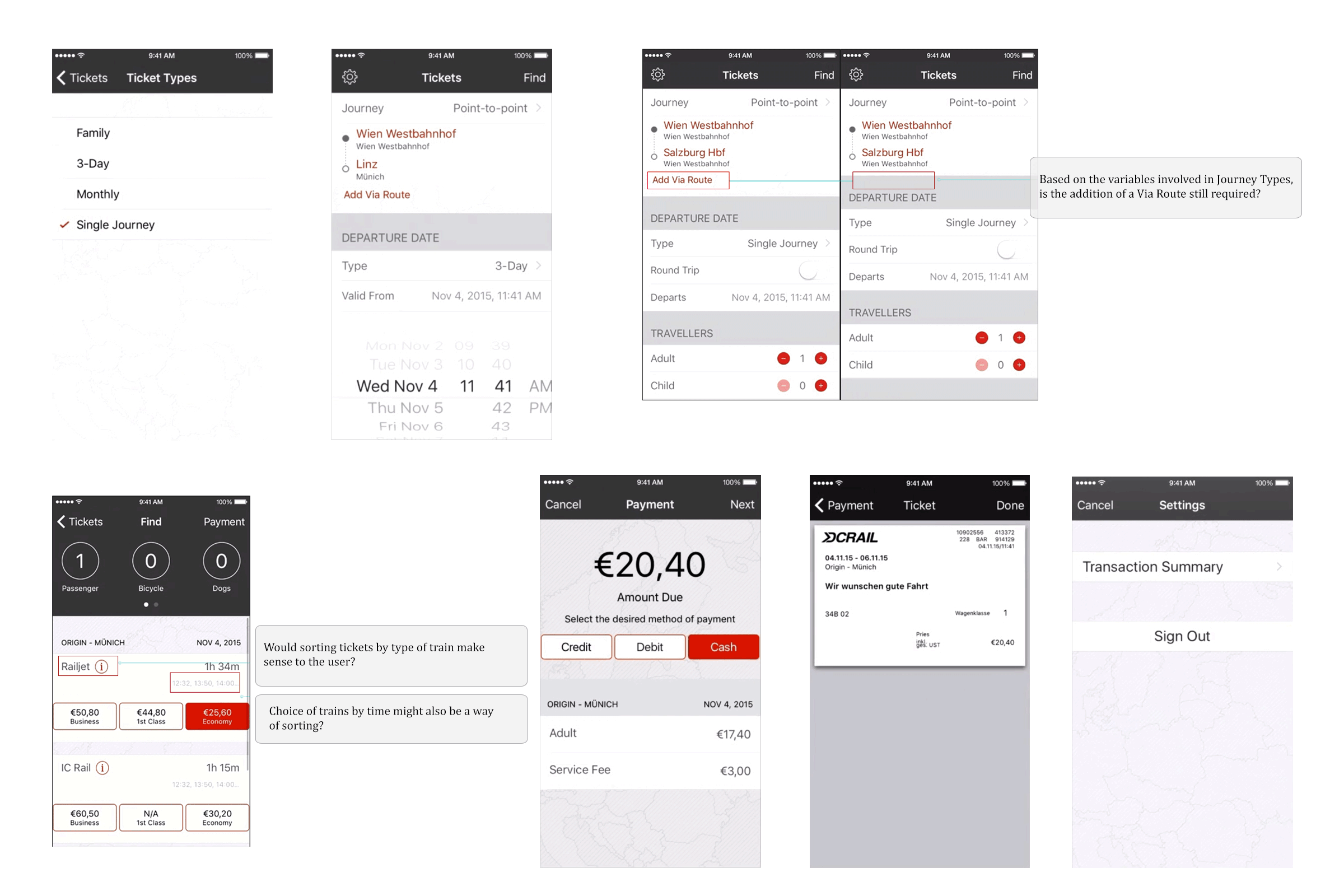
I validated UI iterations for the landing screen and ticket workflows by challenging the client team on connecting trains, schedules, and sorting tickets by train or journey route.
The ÖBB Tickets redesign was a balancing act between replacing legacy paper and handheld workflows and delivering a single, intuitive iOS app that conductors could trust in motion.
For app consolidation, I used systems-thinking to bring fragmented ticket systems into one unified information architecture, giving conductors a single mental model for ticket types, journey routes, and discounts while accepting the integration complexity needed to make it work.
For journey mapping, I translated direct field observations into personas, empathy maps, and interaction decisions that aligned IBM, Apple, and ÖBB stakeholders around real conductor behavior rather than assumptions.
For the landing screen, I compressed multiple job functions into a prioritized entry point that surfaced the most frequent actions without crowding the interface. Every decision was anchored to business goals (reducing training overhead, cutting transaction errors, and speeding up onboard service) and to user needs for clarity, control, and one-handed usability in a moving train environment. That cross-functional collaboration let me modularize the app into iterative releases that shipped quickly without disrupting live rail operations.
This shipped as part of IBM's broader Enterprise Mobile Suite with Apple, the same design and delivery model that produced apps for banking, industrial safety, and energy sector field teams.
During the iterative design process, I kept close contact with the ÖBB Train Attendants, regularly setting up feedback sessions to verify use-case scenarios and apply feedback directly to the designs. That continuous loop shaped the consolidated app architecture, the landing screen hierarchy, and the validation of edge cases like connecting trains and schedule lookups, keeping IBM, Apple, and ÖBB stakeholders aligned around real conductor behavior rather than assumptions.